
 Pin It
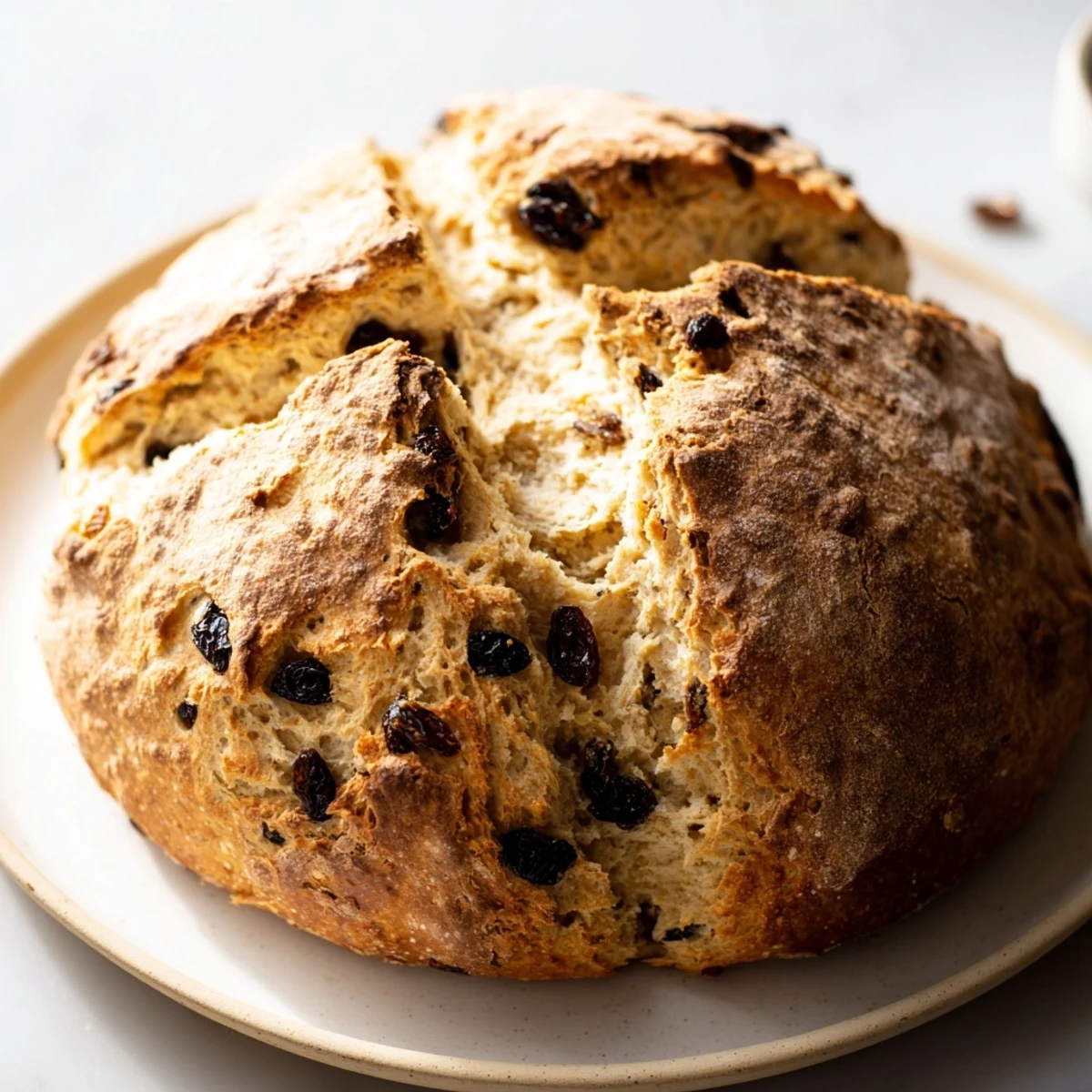
 This Irish soda bread features a golden crust and a tender interior dotted with juicy raisins, creating a festive and flavorful loaf. The dough comes together quickly with simple ingredients like flour, baking soda, buttermilk, and butter. With easy preparation and baking steps, it yields a round loaf perfect for slicing alongside soups or Irish butter. The top is scored for better expansion, giving it a traditional look. Best enjoyed fresh, this bread makes a hearty addition to any celebratory meal.
There is something almost magical about a bread that requires no yeast, no rising time, and still emerges from the oven with a golden crust and tender heart. My first attempt at soda bread happened during a particularly gray March when I needed something warm and comforting more than I needed a perfect bake. The kitchen filled with that wholesome wheat-and-butter aroma, and suddenly the day felt brighter. Now this recipe appears on my table whenever I need that kind of instant comfort.
Last year I baked three loaves for a small gathering, and they disappeared before anything else on the table. Friends kept asking what made it so good, and the truth is the simplicity itself might be the secret ingredient. There is no technique anxiety here, no worrying about whether the yeast is active, just straightforward mixing and baking that yields something extraordinary.
Ingredients
- 4 cups all-purpose flour: The foundation of the bread, providing structure and that familiar wholesome taste we crave in comfort baking.
- 1 teaspoon baking soda: Works with the buttermilk to create the rise, giving the bread its characteristic tender crumb without needing yeast.
- 1 teaspoon salt: Enhances all the flavors and balances the sweetness from the raisins.
- 2 tablespoons granulated sugar: Just enough to complement the natural sweetness of the raisins without making the bread dessert-like.
- 1 cup raisins or currants: These little pockets of sweetness throughout the bread make each bite interesting and add moisture.
- 1 3/4 cups buttermilk: The acidity activates the baking soda while creating a tender texture and subtle tang.
- 4 tablespoons unsalted butter, melted and cooled: Adds richness and helps create that beautiful golden crust we all love.
Instructions
- Get your oven ready:
- Preheat to 425°F and line a baking sheet with parchment paper so you are ready to go once the dough is mixed.
- Whisk the dry ingredients:
- In a large bowl, combine flour, baking soda, salt, and sugar until everything is evenly distributed.
- Add the raisins:
- Stir in the raisins or currants so they are well coated with flour and will not clump together.
- Create the dough:
- Make a well in the center and pour in the buttermilk and melted butter. Mix gently with a wooden spoon or your hands just until a shaggy dough forms.
- Bring it together:
- Turn onto a lightly floured surface and knead gently for about 30 seconds, just until the dough holds together.
- Shape your loaf:
- Form into a round about 7 inches across and place on your prepared baking sheet.
- Make the signature cross:
- Use a sharp knife to cut a deep X across the top, about half an inch deep, to help the bread expand beautifully.
- Bake to golden perfection:
- Bake for 35 to 40 minutes until the loaf is golden and sounds hollow when tapped on the bottom.
- Let it rest:
- Cool on a wire rack for at least 20 minutes before slicing to give the crumb time to set.
 Pin It
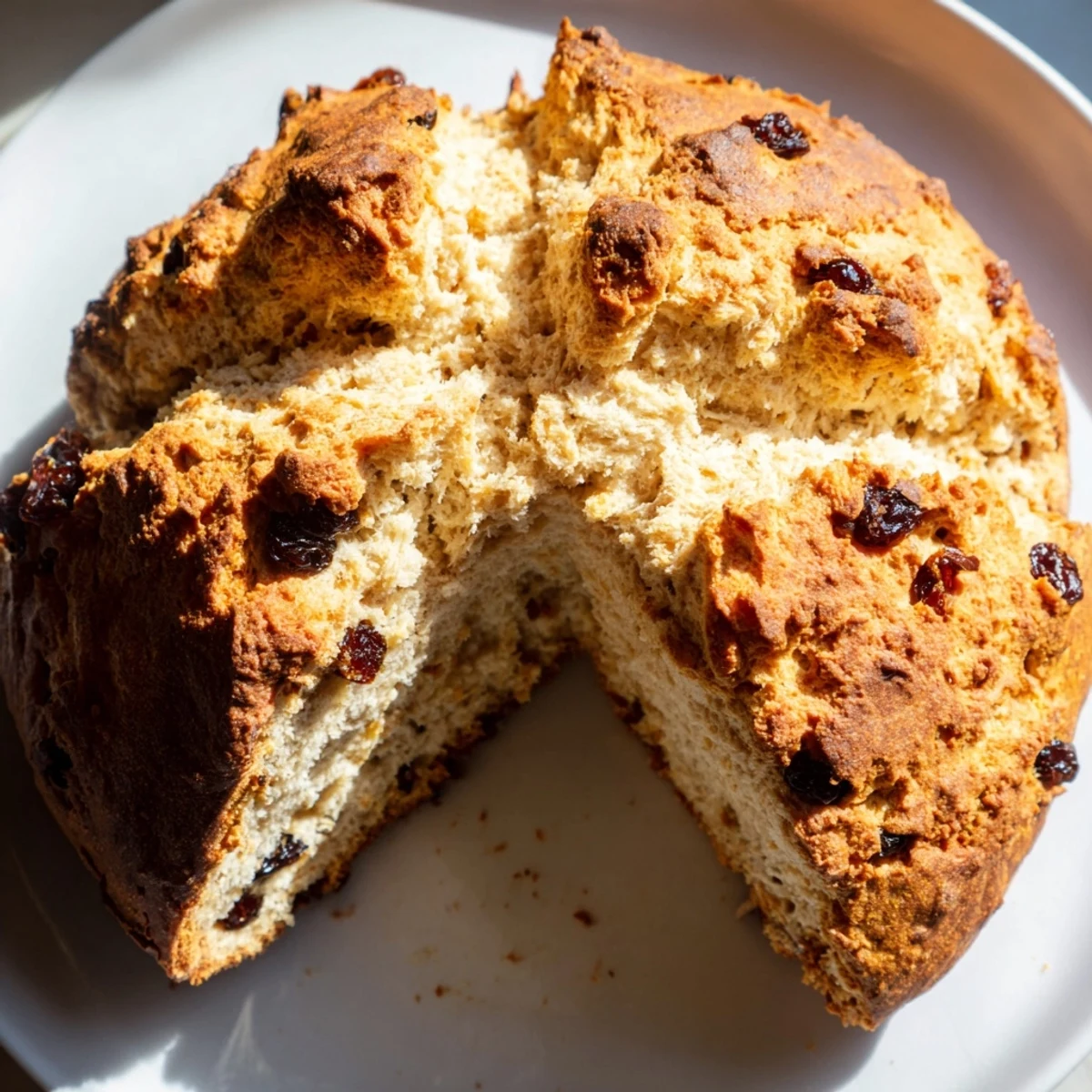
 The moment I cut into that first loaf and saw the steam rising, I understood why this bread has been cherished for generations. Something about the simplicity makes it feel like a hug from the past while still being perfect for right now.
Making It Your Own
Sometimes I leave out the raisins for a more traditional version that is perfect for sopping up soups and stews. Other times I add caraway seeds for that authentic Irish pub flavor. The base recipe is so forgiving that you can experiment without fear of failure.
The Perfect Pairing
Warm slices spread with salted Irish butter are hard to beat, but this bread also loves a good jam or honey. Try it alongside a hearty potato soup or beef stew for a meal that feels like it came straight from a cottage kitchen.
Storage Secrets
This bread is at its absolute best within the first two days, wrapped tightly at room temperature. After that, it makes excellent toast or can be frozen for up to three months. Slice before freezing and you can grab exactly what you need.
- Wrap the cooled loaf in a clean kitchen towel inside a plastic bag to keep the crust from getting too soft
- Revive day-old bread by warming it in a 350°F oven for 10 minutes
- If freezing, separate slices with parchment paper so they do not stick together
 Pin It
 May your kitchen always smell like warm bread and your table be surrounded by people who appreciate the simple beauty of something made by hand.
Recipe FAQs
- → What makes Irish soda bread different from other breads?
-
It uses baking soda as a leavening agent instead of yeast, making it quicker to prepare and giving a dense, tender crumb.
- → Can I substitute raisins with other add-ins?
-
Yes, currants or dried cranberries work well, adding a similar sweet burst without altering the texture much.
- → Why is the top of the loaf cut with an X before baking?
-
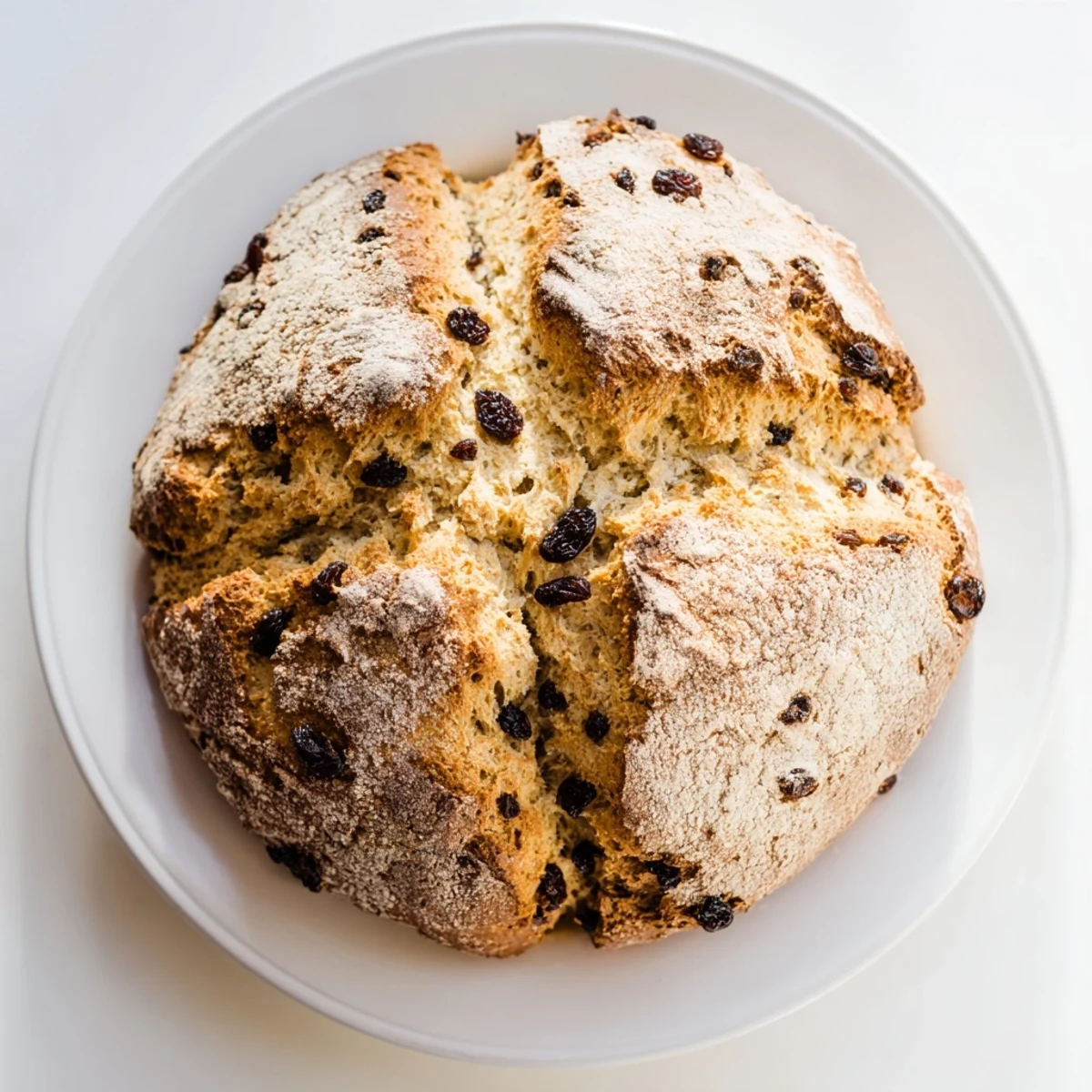
Cutting an X helps the bread expand evenly during baking and creates the traditional look of Irish soda bread.
- → Is it necessary to use buttermilk in this bread?
-
Buttermilk reacts with the baking soda to create the rise; you can substitute with milk plus vinegar or lemon juice as an alternative.
- → How should the bread be stored to maintain freshness?
-
Wrap it tightly at room temperature and consume within two days to enjoy its optimal texture and flavor.
- → Can I make this bread whole wheat?
-
Yes, substituting half the all-purpose flour with whole wheat flour yields a heartier loaf with more texture.