
 Pin It
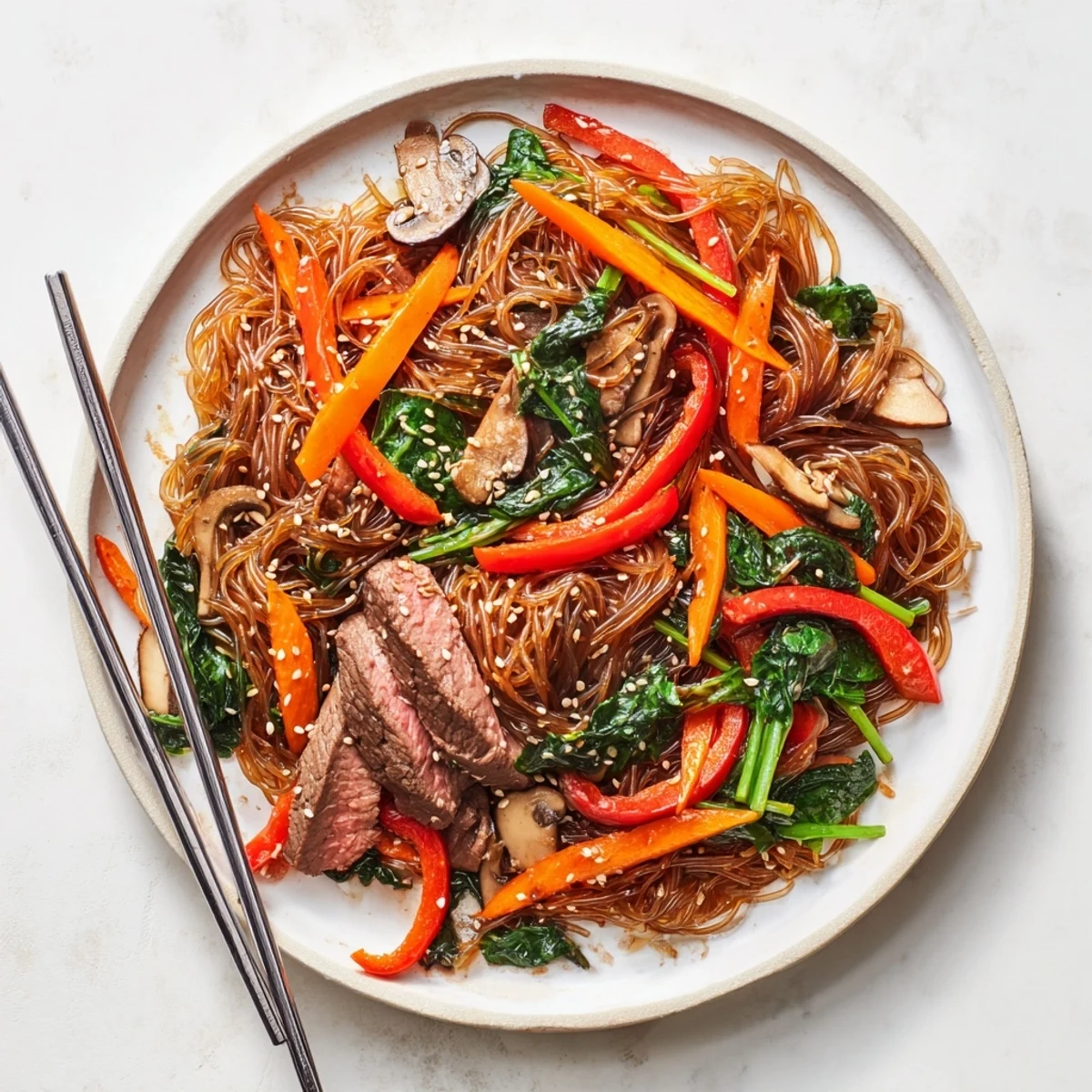
 This Korean-inspired bowl brings together thinly sliced flank steak and sweet potato glass noodles with crisp vegetables. The savory sauce combines soy sauce, brown sugar, and gochujang for that perfect balance of sweet and mildly spicy flavors. Ready in under an hour, it's an ideal weeknight dinner that feels special without requiring advanced techniques.
My first attempt at Korean glass noodles ended in a sticky mess because I didnt soak them properly. Now I make these beef noodles whenever I need something comforting but surprisingly quick.
Last winter my roommate walked in while I was stir-frying and said it smelled better than our favorite Korean takeout spot. That was the night this recipe became a permanent resident in our dinner rotation.
Ingredients
- Flank steak or sirloin: Thinly slicing against the grain makes every bite tender
- Sweet potato glass noodles: These chewy dangmyeon noodles are what make the dish authentically Korean
- Gochujang: Korean chili paste brings a deep fermented heat that you cannot replicate with hot sauce
- Shiitake mushrooms: They add umami that bridges the beef and vegetables perfectly
Instructions
- Prep the beef:
- Toss the sliced beef with soy sauce and cornstarch until coated. The cornstarch creates a silky protective layer that keeps the meat juicy during high-heat cooking.
- Cook the noodles:
- Boil the glass noodles according to the package then rinse immediately under cold water. This stops the cooking process and prevents them from becoming a gummy tangle.
- Mix the sauce:
- Whisk together soy sauce, brown sugar, gochujang, mirin, sesame oil, garlic, and ginger until the sugar dissolves completely.
- Sear the beef:
- Heat oil in a wok over high heat and add the beef in a single layer. Let it develop a golden crust before tossing, about 2 minutes total, then remove from the pan.
- Cook the vegetables:
- Add fresh oil to the hot wok and stir-fry carrots and peppers until they are crisp-tender. The high heat maintains their bright color and crunch.
- Combine everything:
- Return the beef to the pan along with noodles, spinach, and sauce. Toss vigorously for 2 minutes until the sauce coats every strand and the spinach just wilts.
 Pin It
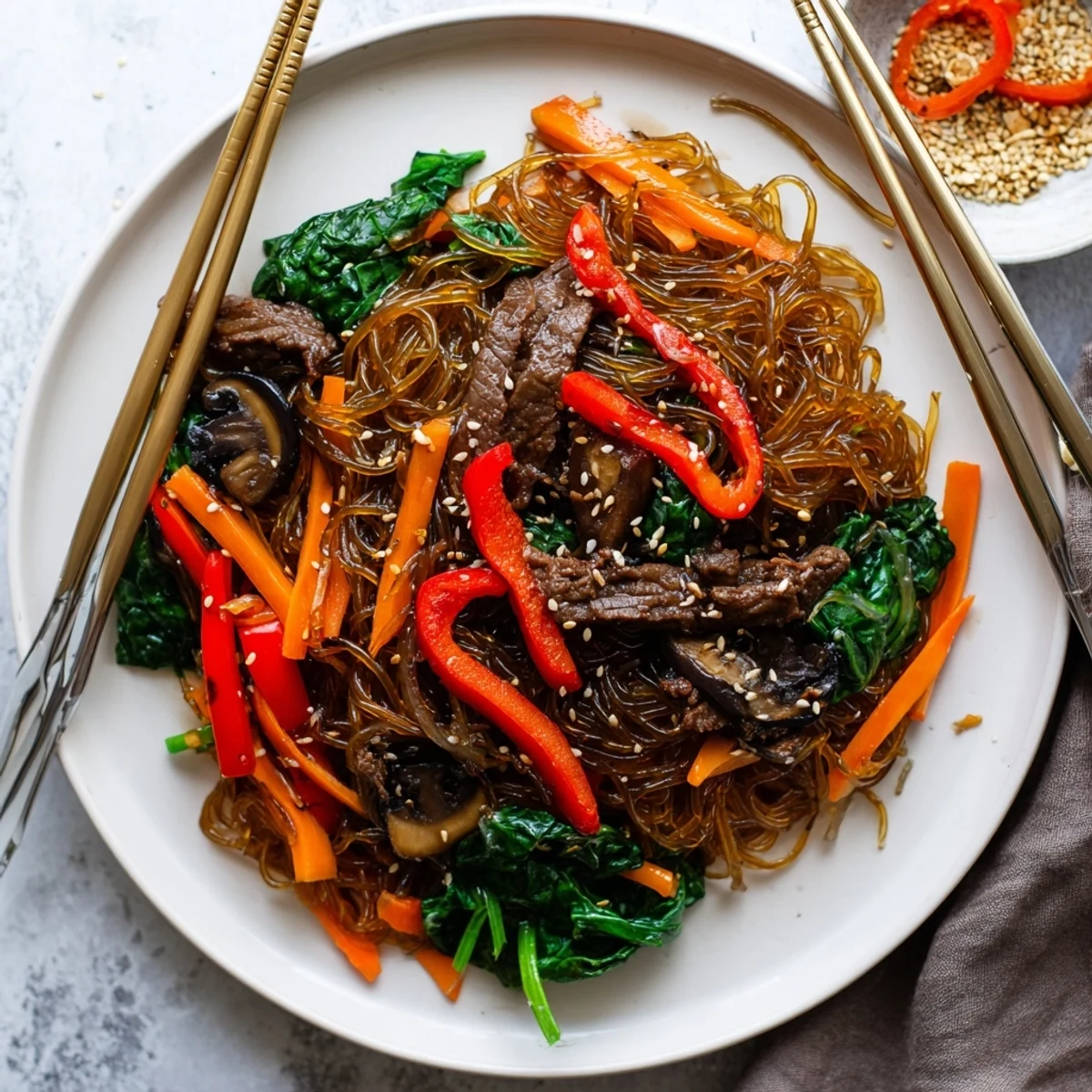
 Something magical happens when the noodles absorb that savory sauce. This dish has turned tired weeknights into little celebrations more times than I can count.
Getting The Noodle Texture Right
Overcooked glass noodles become disappointingly soft. I always set a timer for one minute less than the package recommends since they continue cooking in the hot pan later.
Building Flavor In The Sauce
Brown sugar does more than sweeten. It helps the sauce cling to the noodles and creates those gorgeous caramelized spots that make restaurant versions so irresistible.
Make Ahead Strategy
Slice the beef and whisk the sauce in the morning for an even faster dinner. The beef benefits from extra time marinating anyway.
- Keep the sliced beef cold until cooking to maintain texture
- Pre-chop all vegetables and store them in the refrigerator
- Cook the noodles up to a day ahead and toss with a little oil to prevent sticking
 Pin It
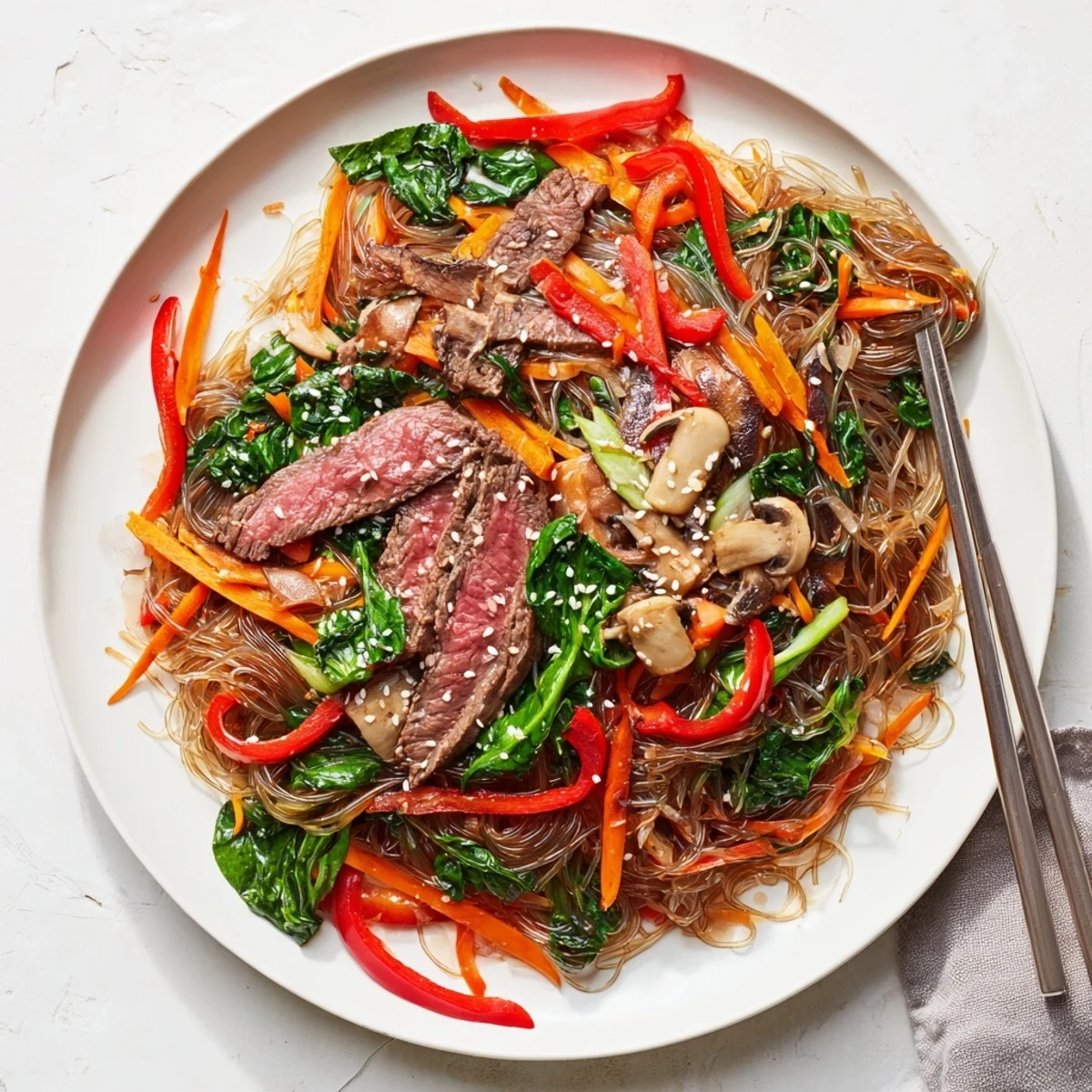
 This recipe proves that some of the best comfort food comes from throwing everything into one pan and letting the flavors do their beautiful work together.
Recipe FAQs
- → What type of noodles work best for this dish?
-
Korean sweet potato glass noodles (dangmyeon) are traditional, offering a chewy, springy texture. Rice noodles make an excellent gluten-free alternative with similar results.
- → Can I make the sauce ahead of time?
-
Absolutely. Whisk the sauce ingredients together and store in an airtight container in the refrigerator for up to a week. The flavors actually meld together nicely over time.
- → How can I adjust the spice level?
-
Increase the gochujang for more heat, or add red pepper flakes. For a milder version, reduce the chili paste to 1 teaspoon or omit entirely—the sauce remains flavorful without it.
- → What other proteins can I use?
-
Sliced chicken breast, shrimp, or firm tofu all work beautifully. Adjust cooking times accordingly—chicken needs about 4-5 minutes, shrimp just 2-3 minutes until pink.
- → Can I add more vegetables?
-
Certainly. Bok choy, snap peas, zucchini, or bean sprouts are wonderful additions. Add them during step 5 with the carrots and peppers, adjusting cooking time as needed.
- → How should I store leftovers?
-
Store in an airtight container in the refrigerator for up to 3 days. Reheat gently in a skillet with a splash of water, adding fresh scallions and sesame seeds before serving.