
 Pin It
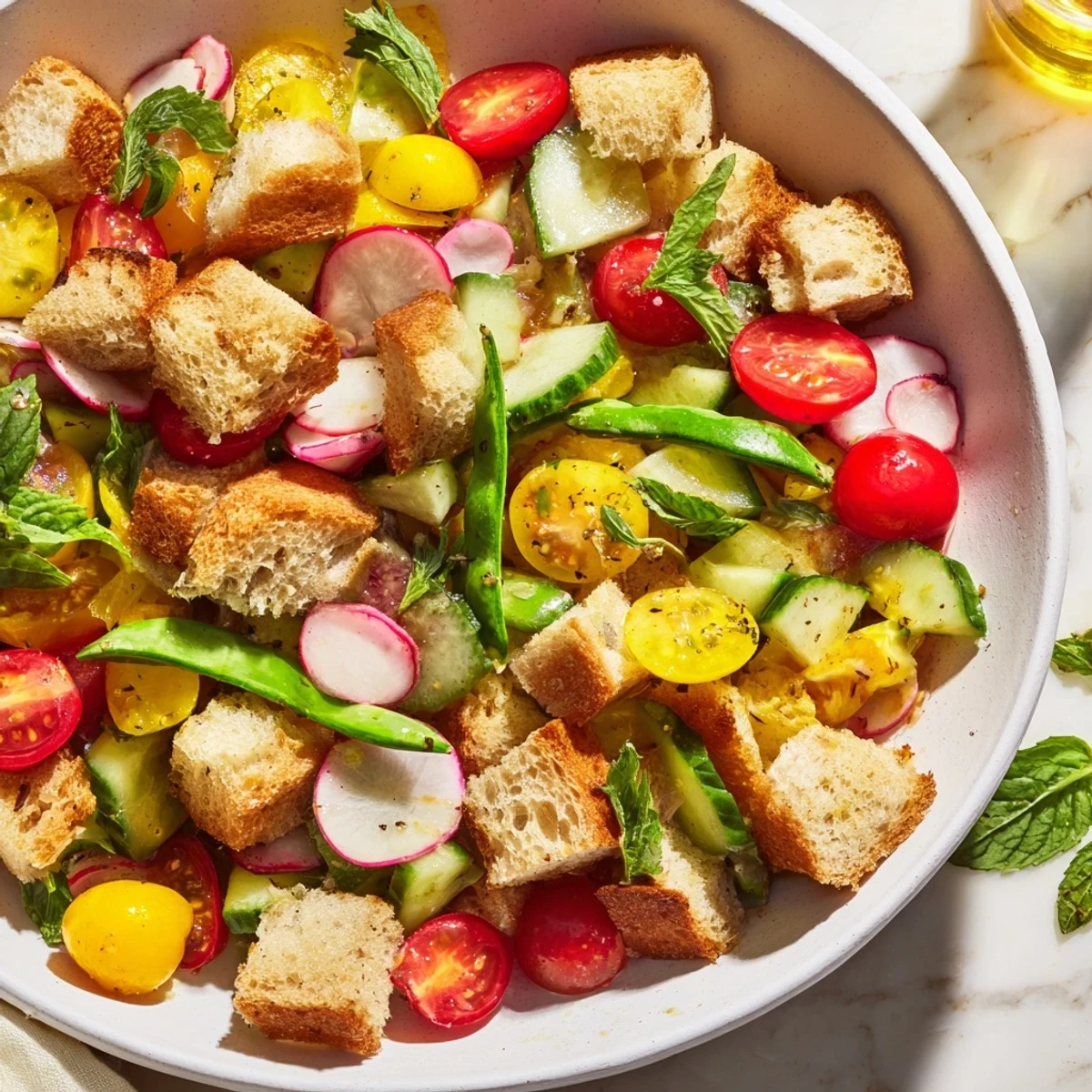
 This Italian classic transforms crusty sourdough into a vibrant salad celebrating spring's finest vegetables. Cherry tomatoes, crisp cucumber, radishes, and sugar snap peas create a colorful medley, while fresh basil, mint, and parsley add aromatic brightness.
The magic happens when toasted bread cubes soak up the tangy red wine vinegar dressing, becoming perfectly tender yet maintaining a satisfying crunch. A brief resting period allows flavors to meld beautifully.
Ready in just 30 minutes with minimal cooking, this versatile dish shines at picnics, outdoor gatherings, or as a refreshing weekday lunch. Add mozzarella for extra richness or keep it light and vegetarian—the result is always irresistibly fresh.
The first time I made panzanella was during an unexpectedly warm April afternoon when my crisper drawer was overflowing with vegetables from an overambitious farmers market run. I had a day old sourdough loaf sitting on the counter that was too good to toss but too stale for sandwiches, and suddenly this rustic Italian bread salad made perfect sense. The way those toasted bread cubes soaked up all those bright spring flavors while still keeping their crunch made me understand why Italians have been making this for centuries.
I brought this to a friends rooftop gathering last spring, and honestly, I was nervous it would seem too simple compared to the elaborate spreads everyone else had brought. But within fifteen minutes, the bowl was completely empty and three different people had asked for the recipe. There is something about the contrast of crisp vegetables against those golden, oil soaked croutons that makes people instinctively reach for seconds.
Ingredients
- 200 g crusty sourdough or ciabatta: Day old bread works best here, it has structure to hold up against the dressing without turning to mush immediately
- 2 tbsp extra virgin olive oil: For toasting the bread, this creates those beautiful golden edges that stay satisfyingly crisp
- 250 g cherry tomatoes: When they are halved and marinated, they release just enough juice to flavor the bread without making things soggy
- 1 small cucumber: Look for firm ones with thin skin, they add essential crunch and freshness
- 1 yellow bell pepper: The sweetness here balances the sharp vinegar and peppery radishes perfectly
- 6 radishes: Thinly sliced, they bring this lovely peppery bite that cuts through the oil and bread
- 100 g sugar snap peas: Their natural sweetness pops when raw, adding a fresh spring note
- 2 spring onions: These provide a gentle onion flavor without overpowering the delicate herbs
- 1 small bunch fresh basil: Tear the leaves by hand, cutting them with a knife makes them bruise and turn dark
- 2 tbsp fresh mint leaves: This is the secret ingredient that makes everything taste brighter and more spring like
- 2 tbsp flat leaf parsley: It brings an earthy note that grounds all the lighter, sweeter flavors
- 3 tbsp extra virgin olive oil: Use the good stuff here since the flavor really shines in such a simple dish
- 1 tbsp red wine vinegar: Adds just enough acidity to wake up all the vegetables
- 1 small garlic clove: Minced finely so it distributes evenly without any harsh raw bites
- tsp Dijon mustard: This helps the dressing emulsify and cling to every vegetable and crouton
- tsp sea salt: Enhances all the natural flavors, but taste as you go since different vegetables have different salt levels
- Freshly ground black pepper: Grind it right before dressing the salad for the most aromatic punch
Instructions
- Toast the bread cubes:
- Preheat your oven to 180C and toss those 2 cm bread cubes with olive oil until evenly coated. Spread them in a single layer on a baking tray and toast for 8 to 10 minutes, shaking halfway through, until they are golden and crisp all over but not rock hard.
- Prep all the vegetables:
- While the bread cools completely, halve your cherry tomatoes, dice the cucumber and bell pepper into bite sized pieces, thinly slice those radishes, and trim then halve the snap peas. Slice the spring onions into thin rounds and place everything in your largest salad bowl.
- Whisk together the dressing:
- In a small bowl, combine the olive oil, red wine vinegar, minced garlic, Dijon mustard, sea salt, and black pepper. Whisk vigorously until the mixture thickens slightly and becomes opaque, about 30 seconds of vigorous mixing.
- Combine everything:
- Add the cooled toasted bread cubes and all your fresh torn herbs to the vegetables. Pour the dressing over everything and use your hands or large spoons to toss gently but thoroughly, ensuring every piece of bread gets coated with that flavorful dressing.
- Let it rest:
- This is the hardest part but walk away for 10 minutes. The bread needs this time to soften slightly and absorb some of those vegetable juices and dressing, transforming from plain croutons into flavor soaked gems.
- Season and serve:
- Taste the salad and adjust the salt or pepper if needed, remembering the flavors will continue to meld. Serve immediately while there is still some crunch to the bread, maybe with an extra basil leaf or two on top.
 Pin It
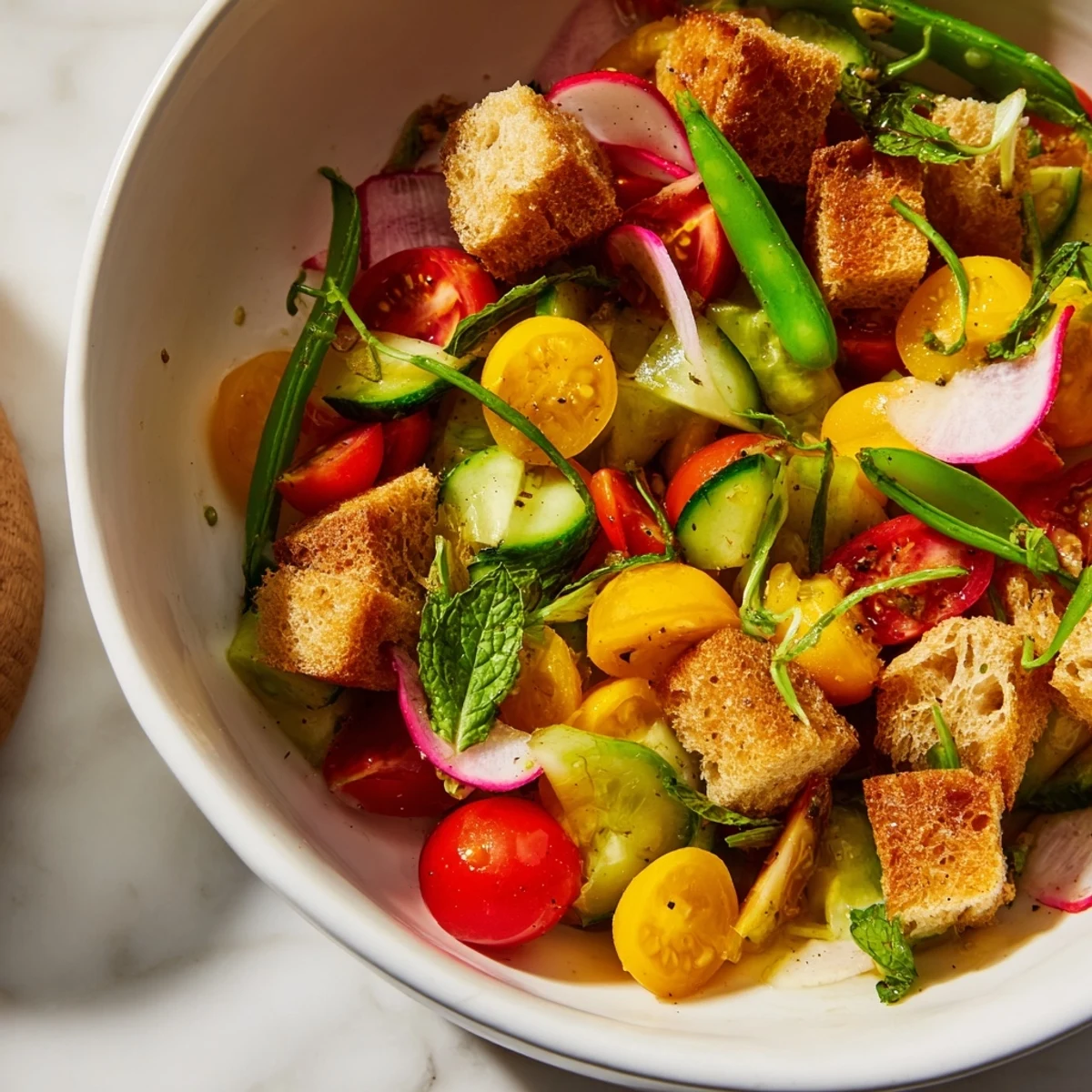
 This salad has become my go to for those nights when cooking feels like too much but I still want something that feels special and thoughtful. There is something deeply satisfying about turning humble ingredients into a dish that looks like it came from a restaurant kitchen.
Make It Your Own
Once you have the basic technique down, this salad welcomes endless variations based on what is in season or sitting in your refrigerator. I have added thinly shaved asparagus in early spring and cubed watermelon in summer, both of which brought something lovely to the bowl.
The Bread Matters
After testing with various breads, I have found that sourdough and ciabatta work best because their open crumb structure absorbs dressing while maintaining some chew. Avoid soft sandwich bread or anything with a tight crumb, as they will turn into unpleasant mush rather than the satisfying slightly chewy texture we are after.
Serving Suggestions
This panzanella is substantial enough to stand alone as a light lunch, especially when topped with some torn fresh mozzarella or crumbled feta for extra protein. It also pairs beautifully with grilled fish or roasted chicken if you want to make it part of a larger spread.
- Let the salad come to room temperature before serving, the flavors really pop when it is not refrigerator cold
- If you are making this ahead, keep the bread and dressing separate until the last 15 minutes
- The salad is best eaten the same day, but leftover vegetables and dressing make a wonderful base for a frittata the next morning
 Pin It
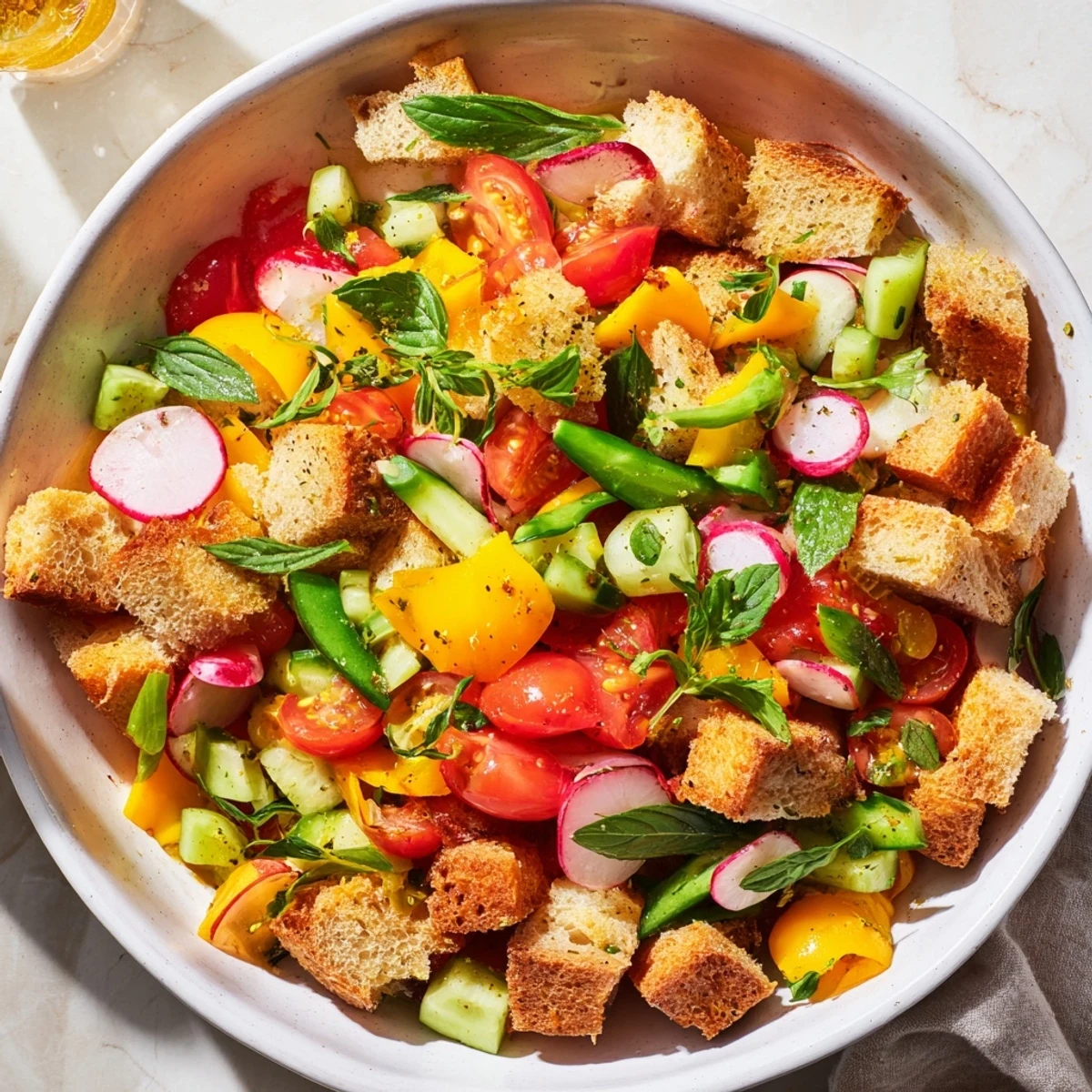
 There is something so honest and unpretentious about a salad that was born from the practical need to use up stale bread. Every time I make it, I am reminded that the best dishes often come from simply working with what you have and letting quality ingredients speak for themselves.
Recipe FAQs
- → What makes panzanella authentic?
-
Authentic panzanella uses day-old crusty bread, preferably Tuscan-style sourdough or ciabatta. The bread is toasted rather than fried, creating a crisp texture that soaks up the vegetable juices and dressing while maintaining structure. High-quality extra virgin olive oil and red wine vinegar are essential for the traditional Italian flavor profile.
- → Can I make this ahead?
-
You can prepare the vegetables and dressing up to 4 hours ahead. Toast the bread just before serving to maintain optimal texture. The salad tastes best after resting 10-15 minutes, allowing the bread to absorb flavors. Avoid assembling more than 2 hours before serving, or the bread may become overly soft.
- → What bread works best?
-
Crusty sourdough, ciabatta, or Tuscan bread are ideal choices. Look for a dense crumb and chewy texture that won't disintegrate when dressed. Stale bread (1-2 days old) works perfectly. Avoid soft sandwich bread or overly airy loaves that won't hold up to the dressing.
- → How do I store leftovers?
-
Store leftovers in an airtight container in the refrigerator for up to 24 hours. The bread will continue softening, creating a more porridge-like texture. For best results, keep leftover components separate and assemble fresh portions. Bring to room temperature before serving for optimal flavor.
- → Can I add protein?
-
Absolutely. Torn mozzarella, crumbled feta, or cubed fresh ricotta complement the vegetables beautifully. For a heartier version, add grilled chicken, white beans, or chickpeas. These additions work well as mix-ins or served alongside the classic preparation.
- → What vegetables can I substitute?
-
Sugar snap peas can be replaced with asparagus tips, blanched green beans, or fresh peas. Try adding artichoke hearts, roasted peppers, or fresh zucchini during peak season. The key is maintaining a mix of crisp textures and vibrant colors that contrast beautifully with the seasoned bread.