
 Pin It
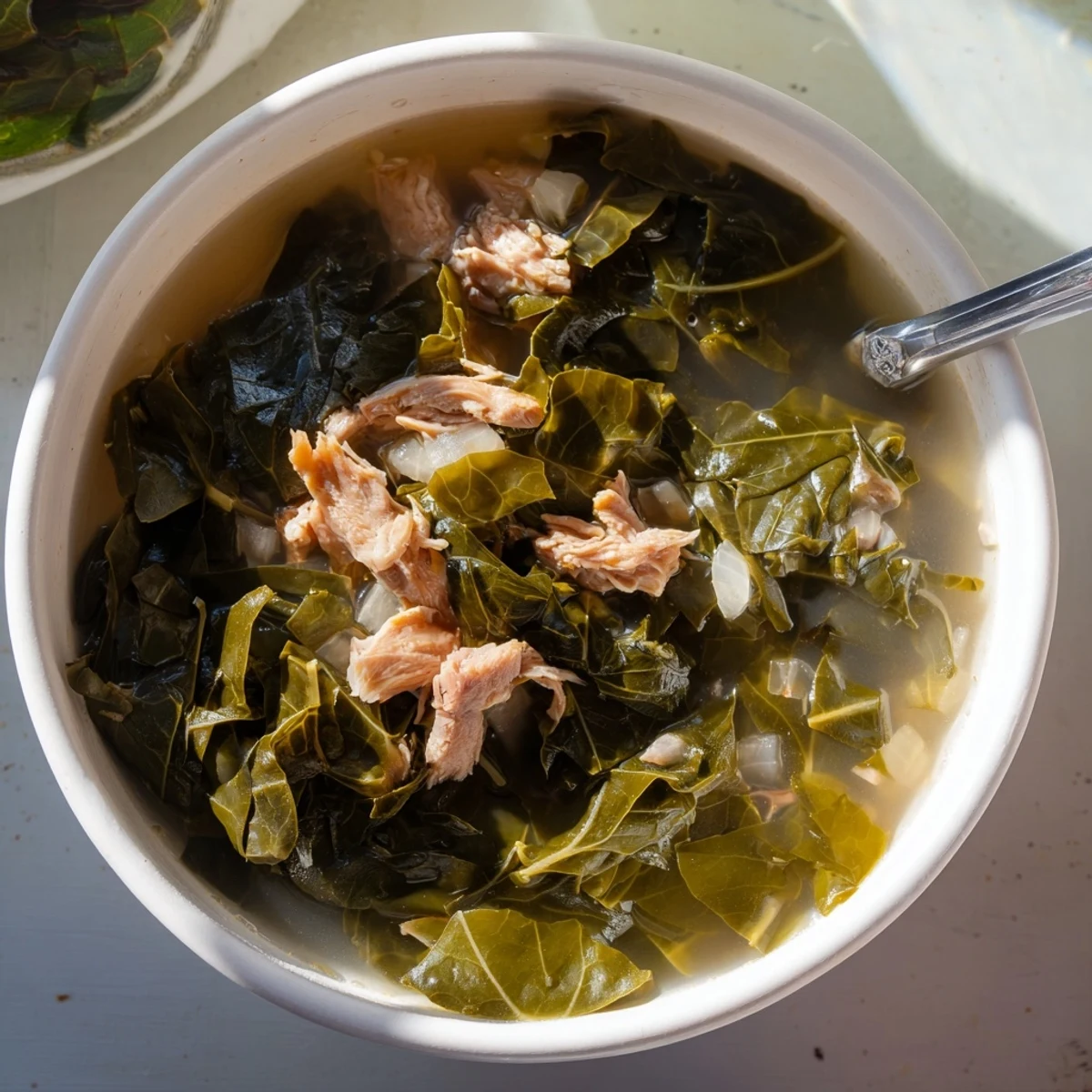
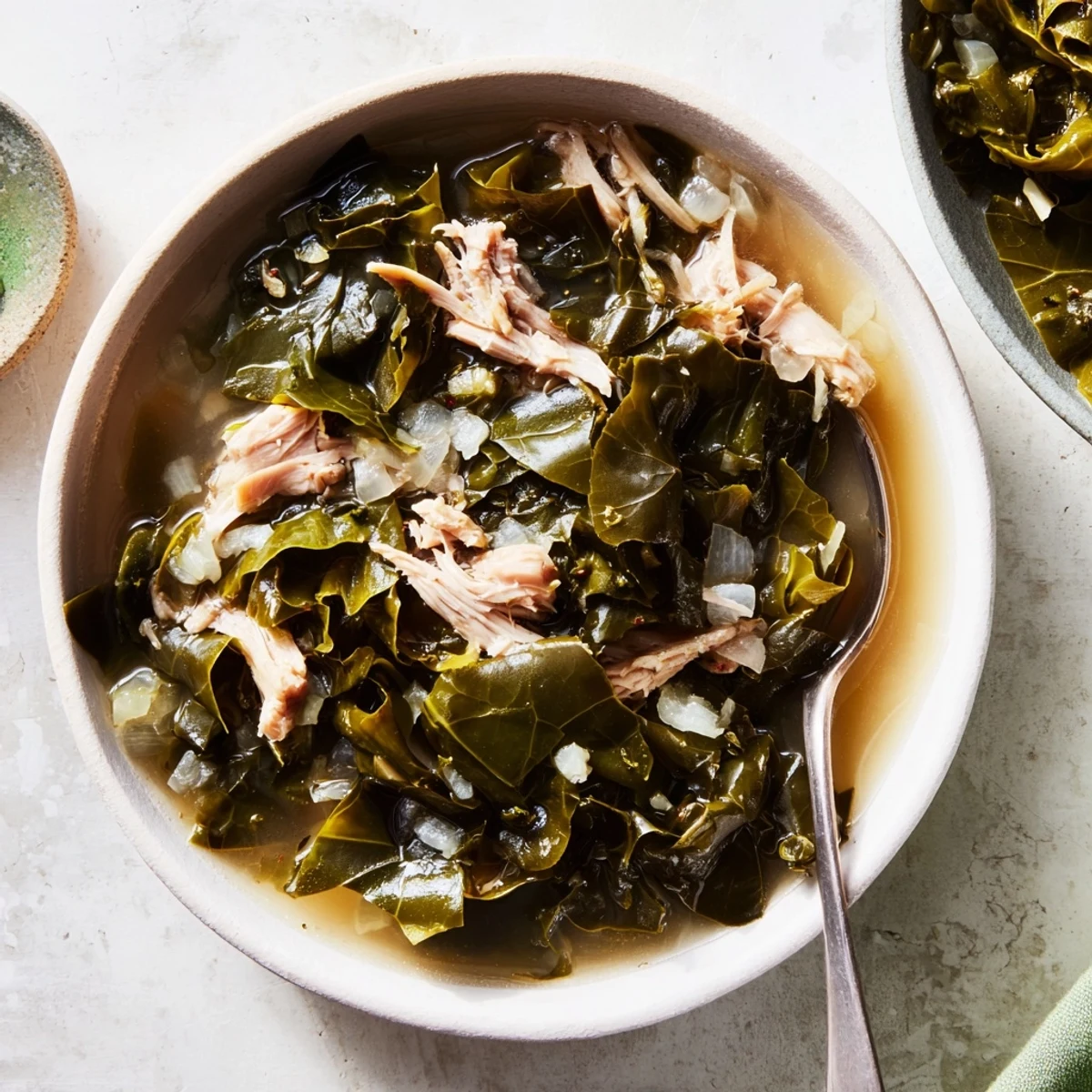
 These authentic Southern collard greens are slow-simmered for over an hour until meltingly tender. The dish gets its deep, smoky flavor from either smoked turkey leg or ham hock, though vegetarians can easily adapt it using vegetable broth and liquid smoke. Aromatics like onion and garlic build a flavorful base, while apple cider vinegar adds brightness that cuts through the richness. The long cooking time transforms the tough leaves into silky, tender greens that absorb all the savory flavors of the broth. Serve alongside cornbread or as part of a traditional Southern spread.
The smell of simmering greens takes me straight to my grandmother's kitchen, where a massive pot would bubble away on the back burner for hours. I used to think collard greens were just too bitter, until she taught me that the secret is patience and that splash of vinegar at the end. Now I keep a bag of chopped greens in my freezer just for rainy Sunday cravings.
Last summer I made a triple batch for my neighborhood block party, and honestly, I thought I'd gone overboard until I saw the empty pot. My neighbor's grandmother asked for the recipe, which might be the highest compliment I've ever received in the kitchen. Now it's my go to dish whenever I need to feed people something that feels like home.
Ingredients
- Collard greens: Fresh greens yield the best texture, but frozen ones work in a pinch, just thaw and drain well first
- Smoked turkey leg or ham hock: This is where the deep smoky flavor comes from, and dont toss that meat after cooking, shred it back into the pot
- Chicken broth: A good quality broth makes all the difference, or use vegetable broth with a drop of liquid smoke for vegetarians
- Onion and garlic: These aromatics build the flavor foundation, so let them cook slowly until they're soft and fragrant
- Apple cider vinegar: The acid cuts through the richness and brightens everything, but add it at the end so it doesn't cook away
Instructions
- Build your flavor base:
- Warm your fat in a heavy bottomed pot and cook those onions until they're soft and translucent, about five minutes, then stir in garlic for just sixty seconds so it doesn't burn
- Create the simmering liquid:
- Drop in your smoked meat and pour in the broth, bringing everything to a gentle bubble before adding the greens
- Add the greens gradually:
- Throw in the chopped collards in batches, watching them wilt down dramatically, which makes room for more until they're all in the pot
- Let them cook low and slow:
- Season everything, reduce the heat, cover the pot, and let it simmer away for an hour, stirring every so often to make sure nothing sticks to the bottom
- Finish with vinegar:
- Fish out any bones, shred the meat back into the greens, stir in that vinegar, and taste before adjusting any final seasoning
 Pin It
 There's something deeply satisfying about a dish that transforms from tough, bitter leaves into something meltingly tender and comforting. These greens have become my comfort food, the thing I cook when I need to feel grounded and connected to something bigger than myself.
Making Them Vegetarian
I've served these to plenty of vegetarians who never missed the meat, thanks to a few drops of liquid smoke and a really good vegetable broth. The key is building that umami foundation with smoked paprika or a dash of smoked salt, which gives you that same depth without the pork.
Perfect Pairings
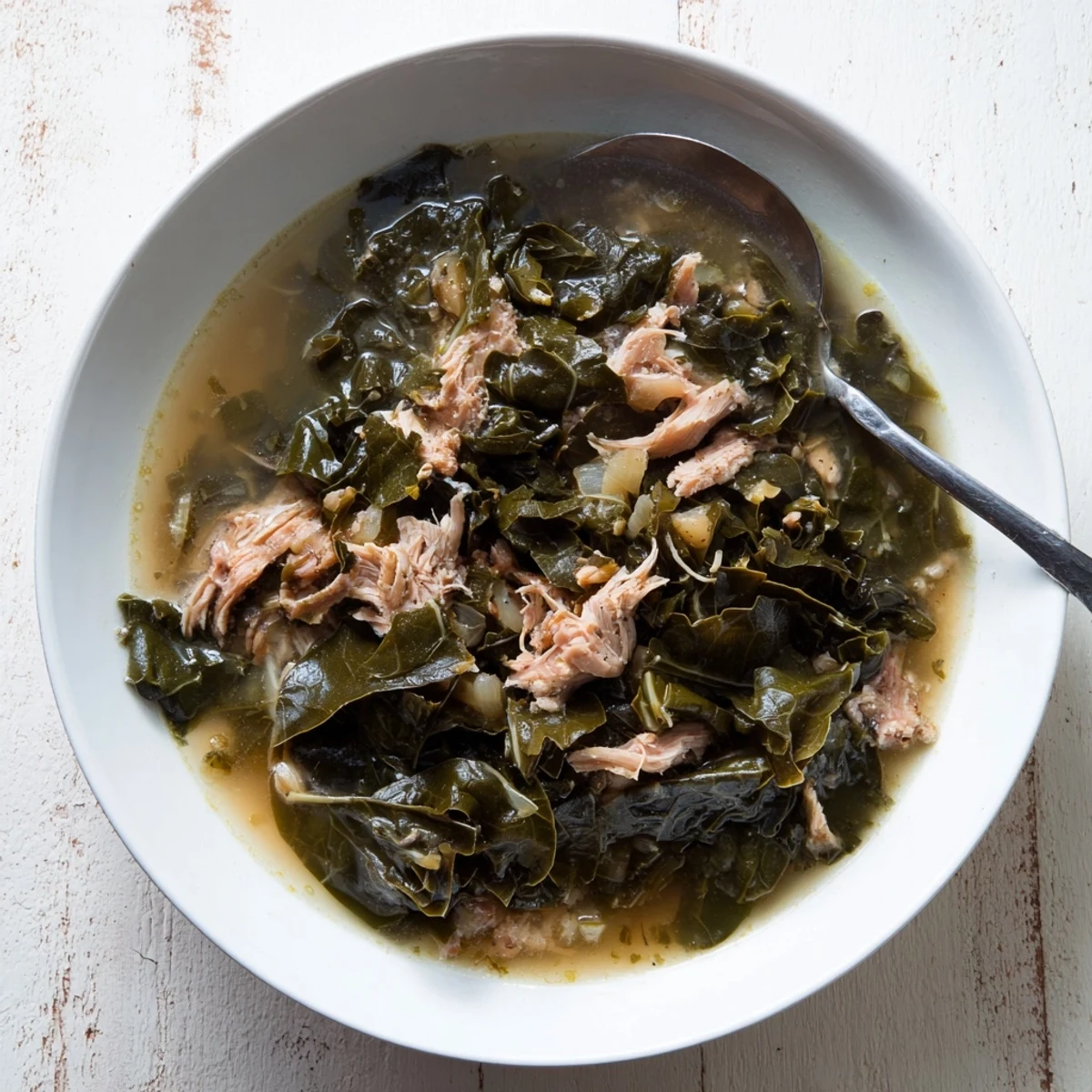
A square of cornbread dunked into the potlikker is non negotiable in my house, that liquid gold at the bottom might be the best part. They also hold their own next to spicy barbecue or roasted chicken, though I've been known to eat a bowl with nothing but a hot sauce for a simple dinner.
Storage And Reheating
These greens actually taste better on day two or three, so I always make extra for leftovers throughout the week. The flavors meld and deepen in the refrigerator, and they reheat beautifully with a splash of water or broth to loosen them up.
- Let them cool completely before refrigerating in an airtight container
- Freeze portions for up to three months if you're meal prepping
- Reheat gently on the stove, adding a little liquid if they seem thick
 Pin It
 There's a reason these have been a Southern staple for generations, they're simple, nourishing, and somehow taste like love. Make a big pot and share them with someone you care about.
Recipe FAQs
- → How do you prepare collard greens for cooking?
-
Remove the tough stems from the collard greens and chop the leaves into bite-sized pieces. Wash them thoroughly to remove any dirt or grit, as they can be sandy. Some cooks prefer to stack the leaves, roll them tightly, and slice into ribbons for uniform cooking.
- → Why do collard greens need to cook for so long?
-
Collard greens have tough, fibrous leaves that require long, slow cooking to become tender. The extended simmering time breaks down the cellulose and allows the greens to absorb the smoky, savory flavors from the meat and seasonings. This low-and-slow method is traditional in Southern cooking.
- → Can I make collard greens vegetarian?
-
Absolutely. Simply omit the smoked turkey or ham hock and use vegetable broth instead of chicken broth. To maintain that essential smoky flavor, add a few drops of liquid smoke or smoked paprika. The result will still be delicious and satisfying.
- → What's the purpose of adding vinegar to collard greens?
-
Apple cider vinegar adds a bright, acidic note that balances the richness of the greens and smoky meat. It cuts through the earthy flavors and enhances the overall taste profile. Add it toward the end of cooking to preserve its tangy kick.
- → How should I store leftover collard greens?
-
Store cooled collard greens in an airtight container in the refrigerator for up to 3 days. The flavors often improve after a day or two as the greens continue to absorb the cooking liquid. Reheat gently on the stovetop, adding a splash of broth or water if needed.
- → What dishes pair well with collard greens?
-
Collard greens are a staple alongside Southern classics like cornbread, fried chicken, macaroni and cheese, and barbecue. They also complement black-eyed peas, rice, or serve as a bed for grilled meats. The slightly bitter greens balance rich, creamy, or sweet dishes perfectly.