
 Pin It
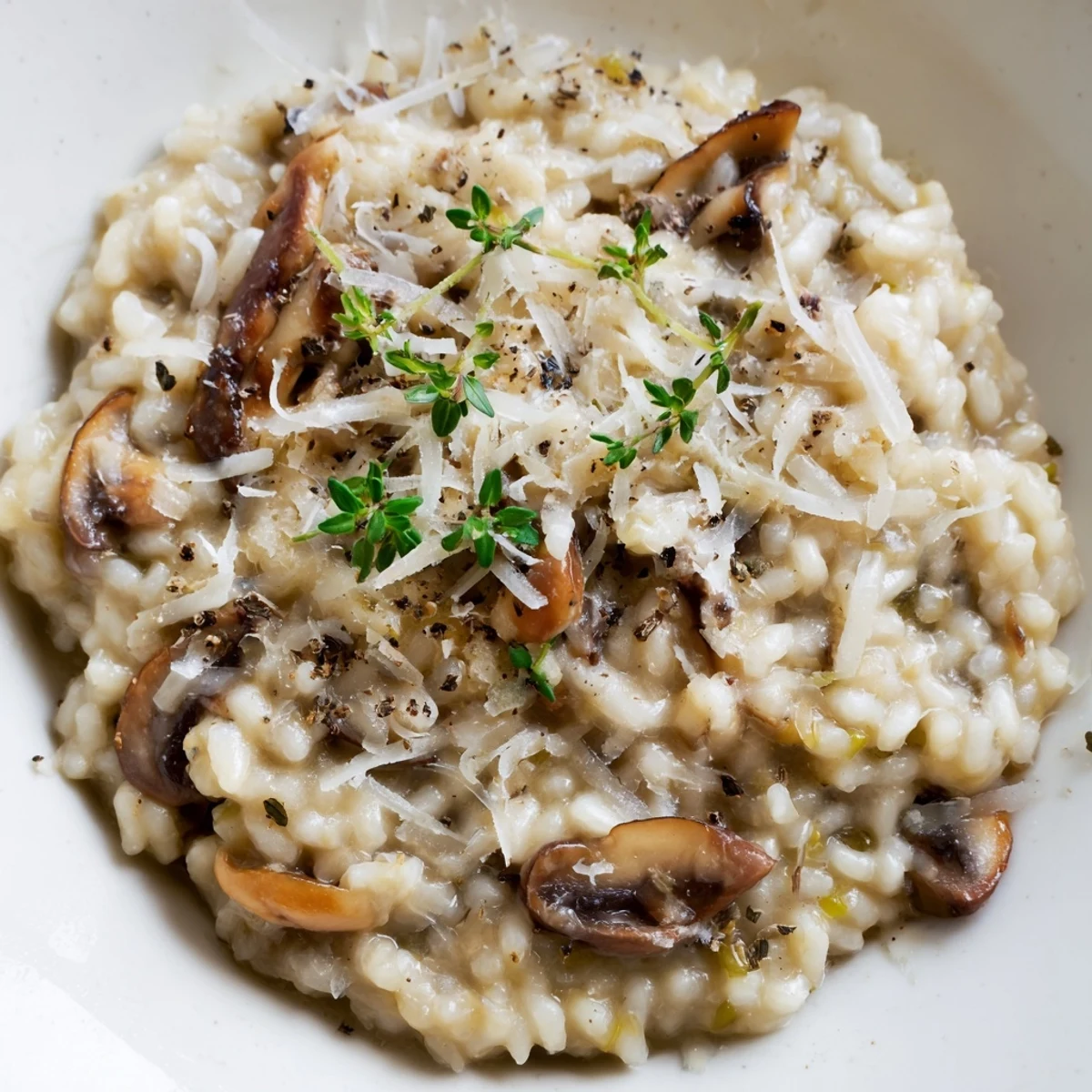
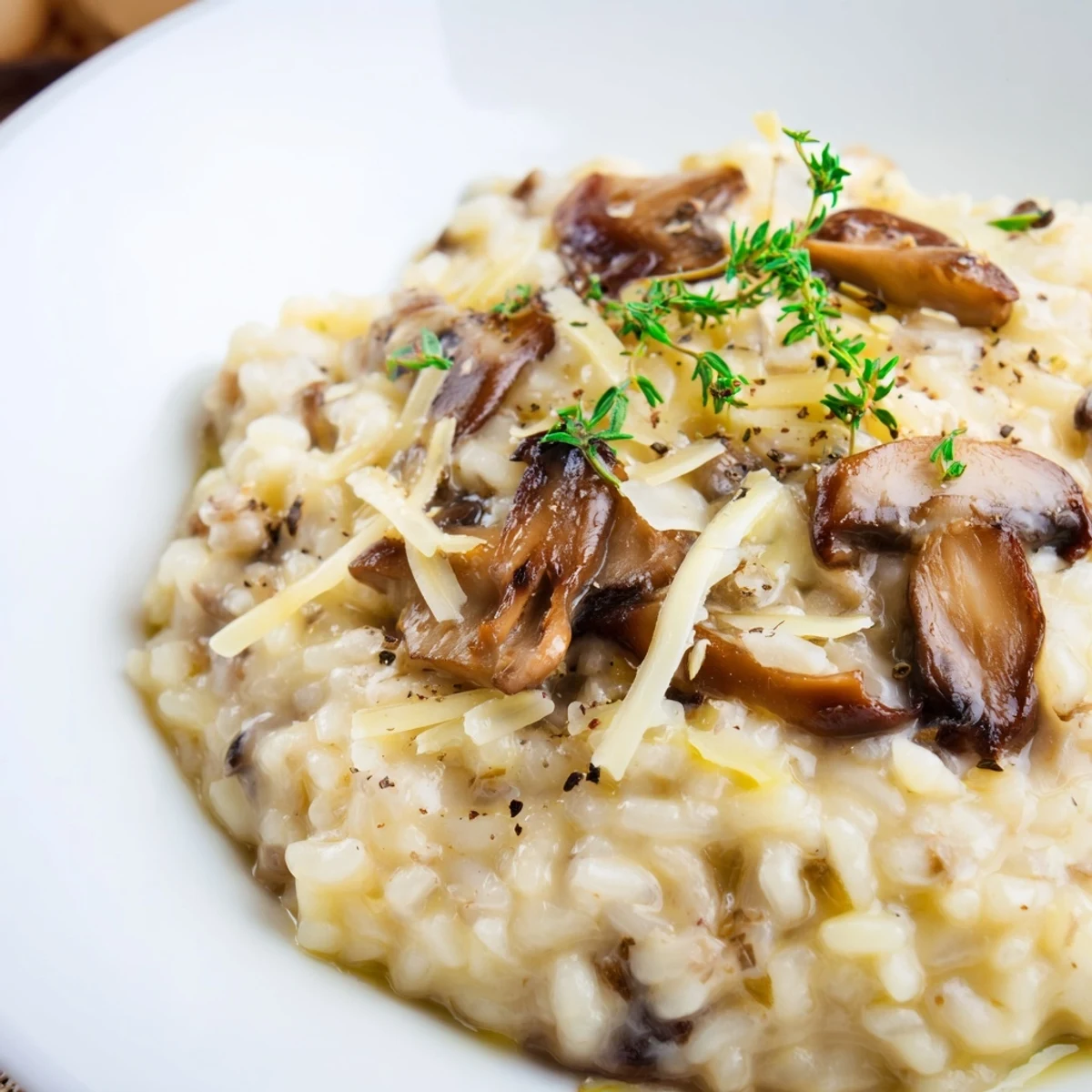
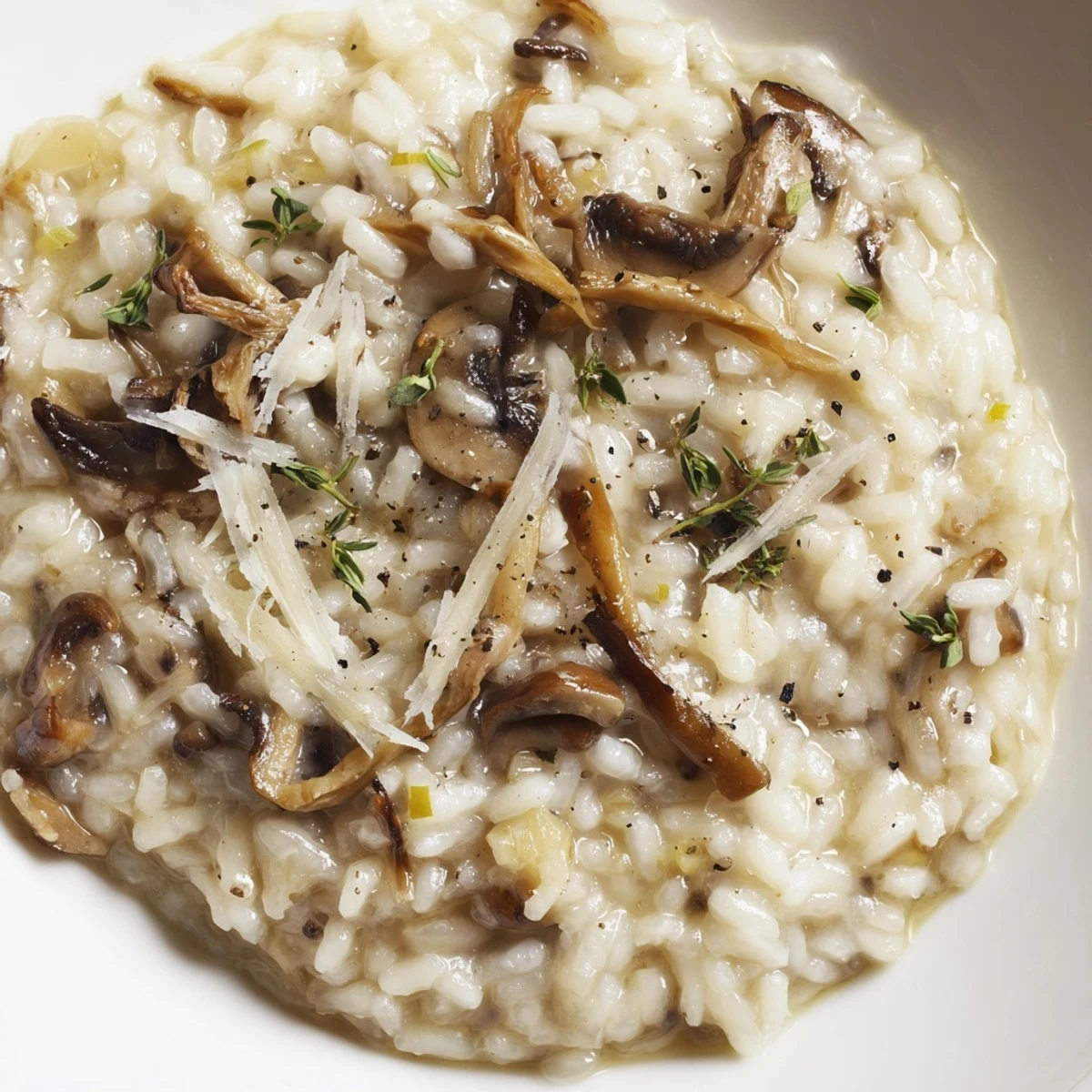
 This Italian risotto blends creamy Arborio rice with earthy cremini mushrooms and fresh thyme. Sautéed onions and garlic create a flavorful base before rice is toasted and slowly cooked in warm vegetable stock and white wine. The dish finishes rich with freshly grated Parmesan and butter, offering a smooth texture and aromatic depth. Ideal for a medium-difficulty main dish, it delivers comforting flavors perfect for a cozy evening meal.
There's something about the smell of mushrooms hitting hot butter that just stops you mid-conversation. Years ago, a friend brought me to a little trattoria outside Milan where the kitchen was open to the dining room, and I watched the chef stir risotto for what felt like forever—ladleful after ladleful of stock, each one making the rice creamier. I went home convinced I couldn't replicate that magic, but it turns out patience and good mushrooms are honestly all you need.
I made this for my partner on a rainy Tuesday when we both needed comfort food, and they kept asking if I'd ordered it from somewhere. That moment—when someone tastes what you've made and genuinely can't believe your hands created it—that's when risotto goes from just dinner to something worth repeating.
Ingredients
- Olive oil and butter: The combination of oil and butter is what gives risotto its golden base and prevents the butter from burning at high heat.
- Yellow onion and garlic: These build the flavor foundation, and mincing them fine means they dissolve into the rice instead of staying chunky.
- Cremini or mixed mushrooms: Don't skip the slicing step—when mushrooms are properly sliced thin, they brown faster and release more of that deep, savory flavor.
- Fresh thyme: Use fresh if you can find it; the aromatic oils are so much more alive than dried.
- Arborio or Carnaroli rice: These short-grain varieties have enough starch to make risotto creamy naturally—regular rice just won't deliver the same texture.
- Dry white wine: This adds acidity and depth, so don't use anything you wouldn't drink.
- Warm vegetable stock: Keeping it warm is key because cold stock would shock the rice and mess up the cooking process.
- Parmesan cheese and butter: These last additions are where the creamy magic happens, so use freshly grated cheese and quality butter.
Instructions
- Build your base:
- Heat the olive oil and butter together in your skillet until the butter foams and smells nutty. Add your diced onion and let it soften for about 4 minutes, stirring now and then—you want it translucent and sweet, not caramelized.
- Wake up the garlic:
- Stir in the minced garlic and cook for just 1 minute. Too long and it burns; too short and you miss its fragrance.
- Brown the mushrooms:
- Spread your sliced mushrooms in the pan with the thyme and let them cook undisturbed for a minute or two to get color, then stir occasionally. You're looking for them to release their moisture and turn a deep golden brown, which takes about 7 minutes and is absolutely worth the wait.
- Toast the rice:
- Add your rice and stir constantly for 1–2 minutes. You'll see the grains start to look slightly translucent around the edges—that's the signal that the rice is ready to absorb liquid.
- Add the wine:
- Pour in your white wine and keep stirring until it's almost completely absorbed. The rice should smell fragrant and feel like it's beginning to soften.
- The patient part (the good part):
- Start adding your warm stock one ladle at a time, stirring frequently. Don't rush this—wait until each addition is mostly absorbed before adding the next ladle. This slow process is what makes risotto creamy instead of mushy, and it takes about 20–25 minutes total.
- Finish with magic:
- Once the rice is creamy and tender but still slightly firm when you bite it, remove from heat and stir in your Parmesan and the final tablespoon of butter. Taste and season with salt and pepper until it feels right to you.
- Serve immediately:
- Risotto waits for no one—plate it right away and optionally top with fresh thyme sprigs if you want a little green.
 Pin It
 I once made this for a dinner party and accidentally added all the stock at once because I wasn't paying attention, and I thought I'd ruined everything. But then I just kept stirring, and somehow it came together. It taught me that risotto is actually more forgiving than people think—as long as you stir and taste along the way, you're going to be fine.
Why Mushrooms Make This Special
Mushrooms aren't just an ingredient here—they're the whole reason this dish tastes so complete and satisfying. When they brown, they develop a savory depth called umami that makes you forget this is vegetarian. If you're ever in the mood to switch things up, shiitake mushrooms bring an almost smoky quality, while oyster mushrooms add a delicate sweetness.
Pairing and Serving
A crisp white wine alongside makes everything taste a little fancier—Pinot Grigio or Sauvignon Blanc are the classics because they echo the white wine in the risotto itself. If you want to turn this into something even more indulgent, a simple green salad on the side cuts through the richness and balances the meal beautifully.
Small Details That Change Everything
Risotto is one of those dishes where tiny choices add up. The quality of your Parmesan, the heat of your pan, whether your stock stays warm—each one matters just enough to be worth thinking about. Some nights I add a splash of cream at the very end just to make it extra luxurious, and some nights I leave it clean and simple depending on the mood.
- If your risotto feels too thick when you finish it, stir in a bit more warm stock or water to loosen it up.
- Leftover risotto can be fried in a hot pan the next day to make crispy risotto cakes, which is its own kind of magic.
- Use a heavy-bottomed pan—it distributes heat evenly and prevents the rice from sticking to one spot.
 Pin It
 Risotto teaches you something quiet about cooking: that good food doesn't come from rushing or complicated technique, but from showing up and stirring. Make this when you want to slow down, and I promise it'll become the kind of dinner you make again and again.
Recipe FAQs
- → What type of rice is best for this risotto?
-
Arborio or Carnaroli rice works best, as their high starch content creates the creamy texture characteristic of risotto.
- → Can I use different mushrooms for this dish?
-
Yes, shiitake, oyster, or mixed wild mushrooms can be substituted to vary the flavor profile.
- → How do I achieve the perfect risotto texture?
-
Stir slowly while adding warm vegetable stock gradually, allowing rice to absorb liquid and become creamy but still al dente.
- → What is the purpose of the white wine in this dish?
-
White wine adds acidity and depth, balancing the creamy richness and enhancing overall flavor.
- → Can this dish be made vegan?
-
To make it vegan, substitute butter with plant-based fats and replace Parmesan with a vegan cheese alternative or nutritional yeast.
- → Is fresh thyme necessary?
-
Fresh thyme adds a fragrant herbal note, but dried thyme can be used if fresh isn't available, adjusting quantity accordingly.