
 Pin It
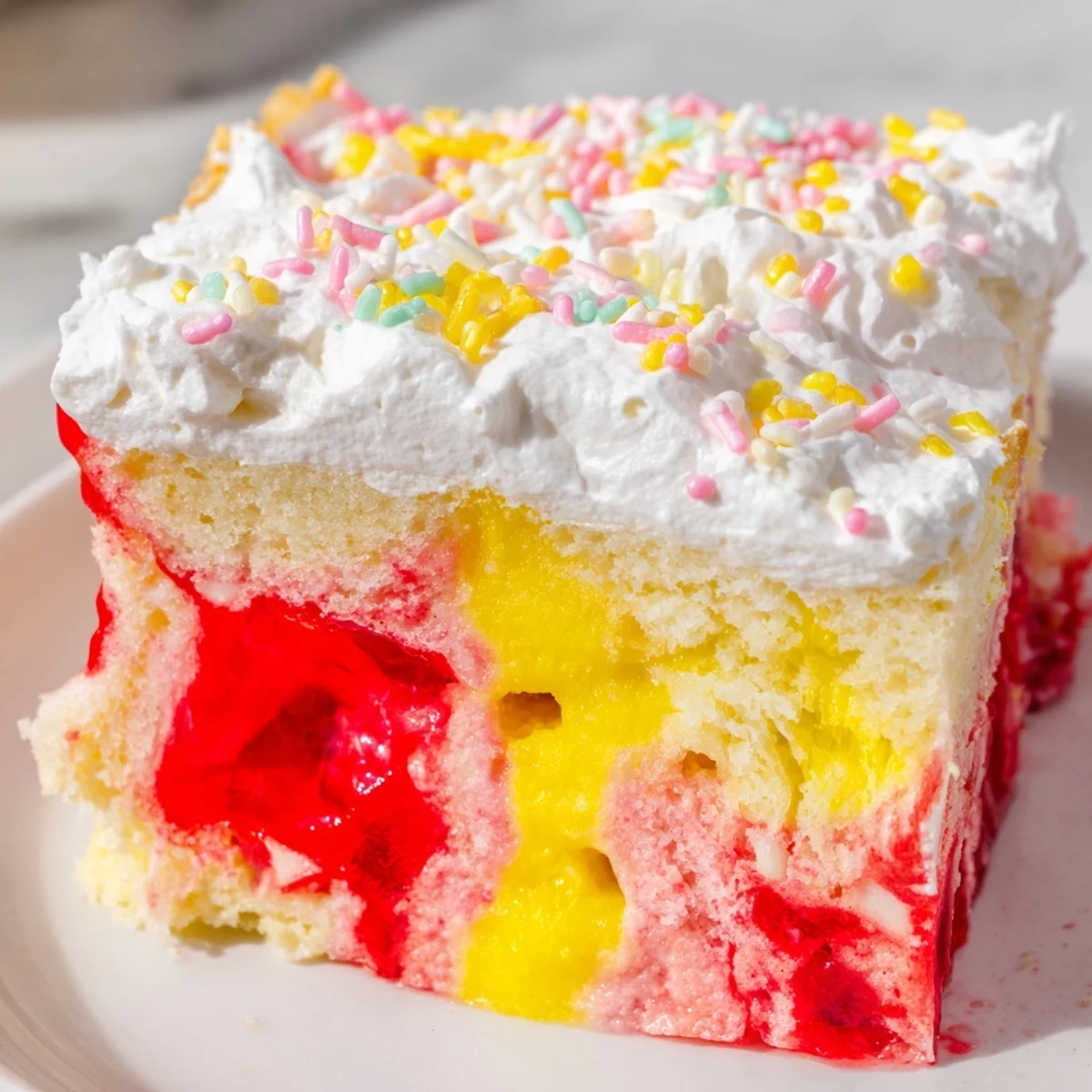
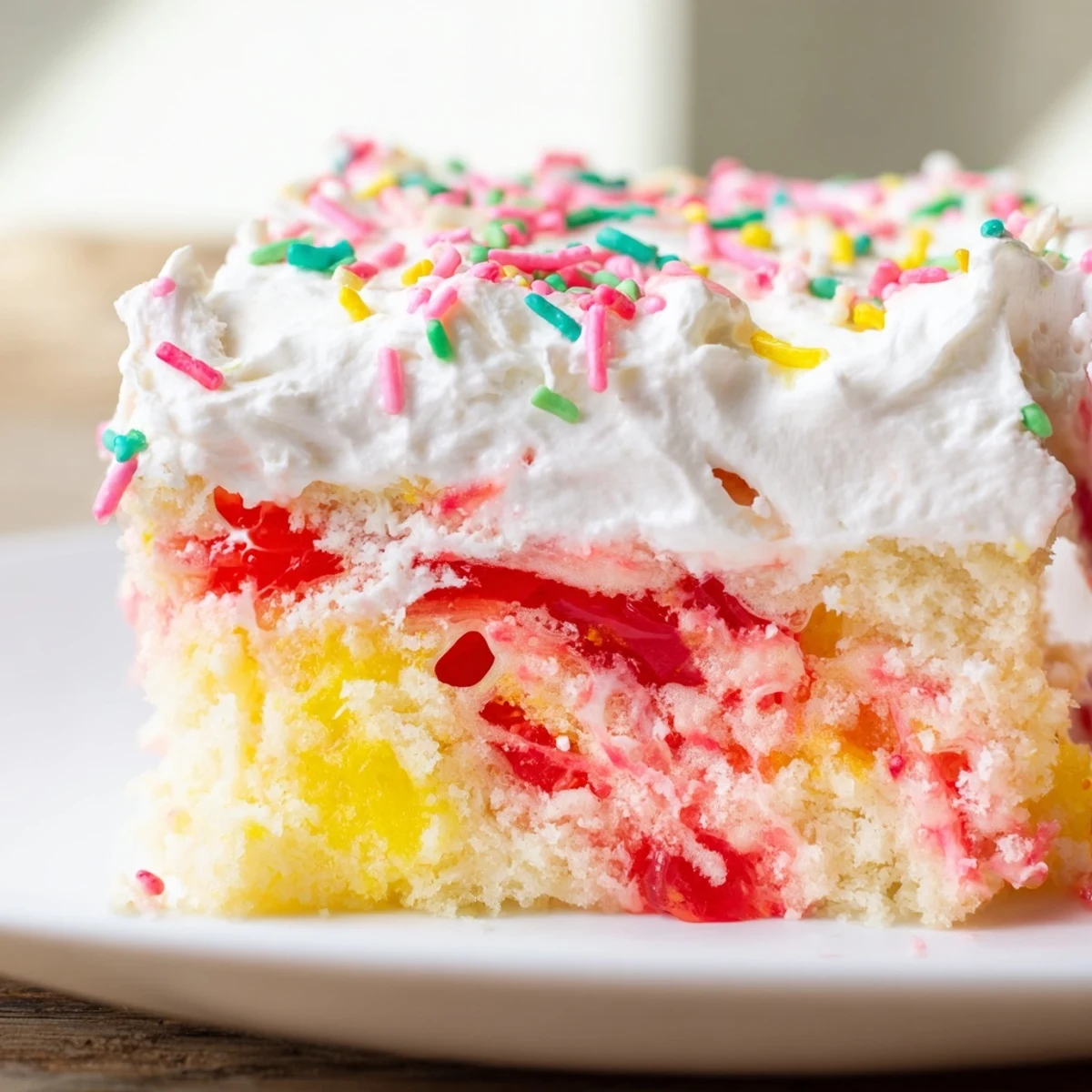
 This vibrant Easter dessert starts with a moist vanilla cake base, infused with colorful strawberry and lemon gelatin poked throughout. After chilling until set, the cake is crowned with freshly whipped heavy cream sweetened with powdered sugar and vanilla extract. The finishing touch comes from pastel sprinkles or jelly beans, making this an ideal centerpiece for spring gatherings and holiday celebrations. The marbled gelatin creates a beautiful visual effect while keeping the cake incredibly moist.
Last spring my daughter begged me to make something colorful for her class party, and I'll admit I was tempted to grab store-bought cookies. Then I remembered poke cakes from my own childhood—those magical desserts where bright gelatin seeps into every tender crumb. The whole kitchen smelled like vanilla and anticipation while we worked side by side, her tiny hands helping me whisk the cream until it formed perfect peaks.
When I brought that first cake to the Easter brunch at my in-laws house, my mother-in-law actually laughed out loud at the zigzag pattern of strawberry and lemon gelatin. But then she took a bite, looked at me with complete surprise, and went back for seconds before anyone else had even been served. Now it's the one dessert my family requests for every spring gathering.
Ingredients
- Vanilla cake mix: Using a high-quality mix makes this so much easier without sacrificing flavor—look for one with real vanilla in the ingredients
- Strawberry and lemon gelatin: These classic Easter colors taste amazing together but feel free to swap in any bright flavors your family loves
- Heavy whipping cream: The real deal makes all the difference here—light and airy with just enough sweetness to balance the tart gelatin
- Pastel sprinkles or jelly beans: Totally optional but they make this feel like a celebration and kids adore picking off their favorite colors
Instructions
- Bake the cake:
- Preheat your oven to 350°F and generously grease a 9x13-inch baking pan. Mix the cake batter according to package directions, pour it in, and bake for 28–32 minutes until a toothpick comes out clean.
- Poke those holes:
- Let the cake cool for exactly 15 minutes—this timing matters. Use the handle of a wooden spoon to poke holes about one inch apart across the entire surface.
- Prepare the gelatin magic:
- In two separate bowls, dissolve each flavor of gelatin in one cup boiling water. Stir until completely dissolved, then stir in one cup cold water to each bowl.
- Add the color:
- Carefully pour the strawberry gelatin on one half of the cake and lemon on the other, watching it disappear down into all those little holes.
- Let it set:
- Cover the pan and refrigerate for at least 2 hours—overnight is even better if you want to get ahead.
- Top with whipped cream:
- Beat the cold heavy cream with powdered sugar and vanilla until stiff peaks form. Spread it generously over the chilled cake.
- Make it festive:
- Sprinkle pastel candies or jelly beans on top right before serving. Slice and serve this beauty cold.
 Pin It
 My niece now asks for this cake on her birthday every year, and we've started making it a family tradition to let the kids design their own gelatin patterns. Something about poking holes in a perfectly good cake and watching it transform makes everyone feel like a kitchen magician.
Making Ahead
This might be the ultimate make-ahead dessert. You can prepare the entire cake through the gelatin step up to 24 hours in advance. Just wait to add the whipped cream until an hour or two before serving—otherwise it can start to break down and lose its fluffy texture.
Flavor Variations
While strawberry and lemon are perfect for Easter, the combinations here are endless. Try berry blue and lime for a Fourth of July cake, or orange and grape for Halloween. I've even used sugar-free gelatin with great results when serving family members watching their sugar intake.
Serving Suggestions
Cut this into squares or rectangles and serve it directly from the pan for a casual feel, or use a spatula to carefully transfer slices to dessert plates for a more polished presentation. Either way, serve it well-chilled.
- A hot cup of coffee cuts through the richness beautifully
- This pairs wonderfully with fresh berries on the side
- Small slices go a long way since it's quite sweet
 Pin It
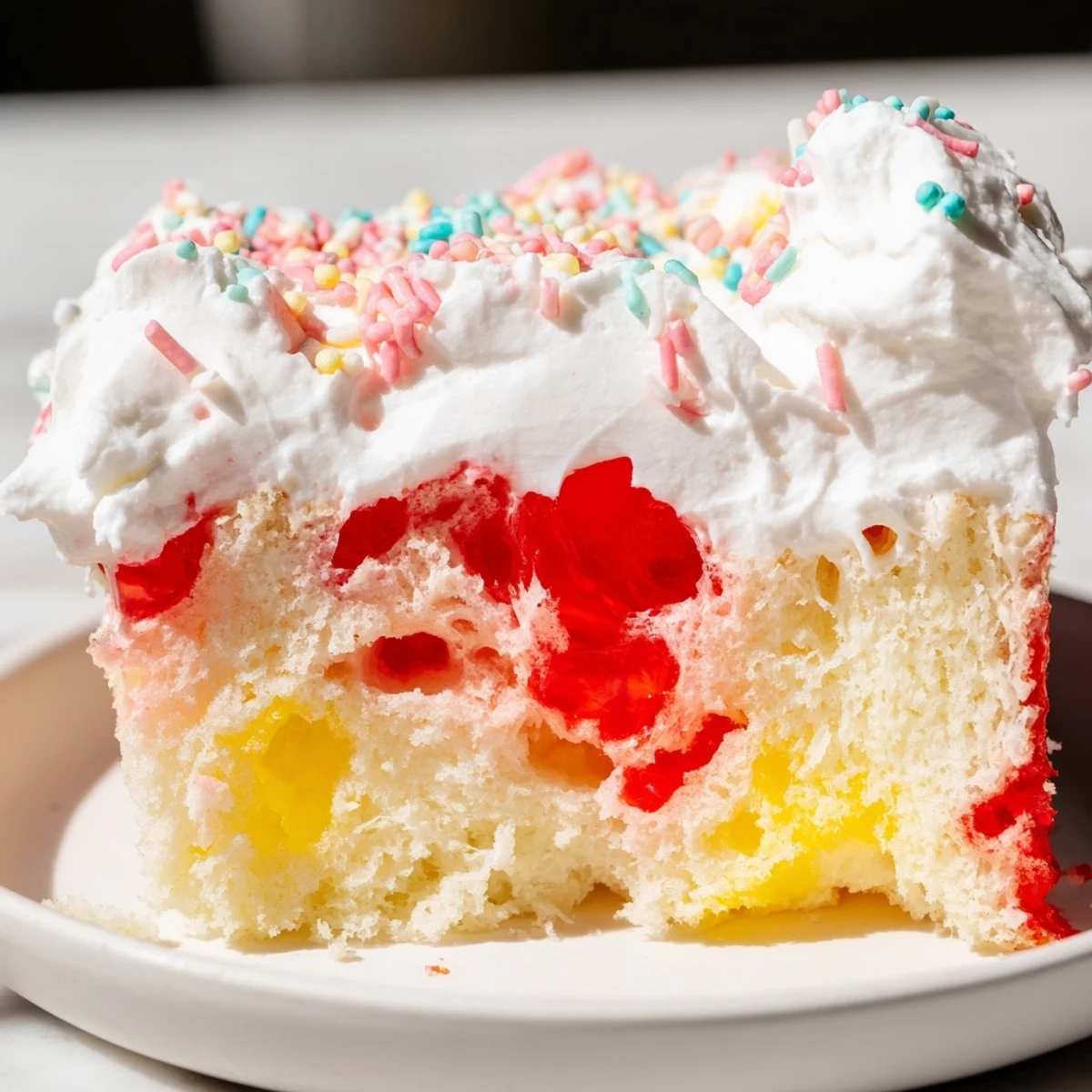
 There's something genuinely joyful about cutting into this cake and seeing those bright jewel-toned pockets peeking through the clouds of whipped cream. It's the dessert that keeps everyone smiling.
Recipe FAQs
- → Can I make this Easter poke cake ahead of time?
-
Yes, this cake can be prepared a day in advance. After adding the gelatin and whipped cream topping, cover and refrigerate. The flavors actually develop better overnight, and the texture remains perfectly moist.
- → What other gelatin flavors work well in this poke cake?
-
Berry blue, lime, orange, or raspberry gelatin all create beautiful results. You can stick to traditional Easter pastels or create vibrant combinations using different colored gelatins for unique visual effects.
- → Can I use homemade cake instead of a mix?
-
Absolutely. Any white or vanilla cake recipe from scratch works wonderfully. Just ensure it bakes in a 9x13-inch pan and has cooled for about 15 minutes before poking the holes for the gelatin.
- → How far apart should I poke the holes in the cake?
-
Poke holes approximately 1 inch apart across the entire surface of the cake using a wooden spoon handle or skewer. This spacing allows the gelatin to distribute evenly while maintaining the cake's structure.
- → Can I freeze this gelatin poke cake?
-
Freezing isn't recommended as the gelatin texture changes when thawed. However, the cake stays fresh in the refrigerator for 2-3 days when covered properly, making it perfect for preparing ahead of Easter weekend.
- → What's the best way to create the marbled gelatin effect?
-
Pour the strawberry gelatin on one half of the cake and lemon on the other, then gently swirl where they meet using a spoon. Alternatively, alternate spoonfuls of each flavor across the surface for a more evenly marbled look.